What Are the Most Common Use Cases for RTLS in Healthcare?
Healthcare organizations operate in complex environments. Workforce shortages, clinician burnout, workplace violence, rising patient expectations, and equipment availability challenges place increasing pressure on health systems and providers. Leaders must improve quality, protect patients, support caregivers, and manage resources, all while meeting regulatory requirements.

Many of these challenges stem from limited visibility. When teams can't easily locate equipment or follow patients through their care journey, inefficiencies emerge. Gaps in environmental monitoring and delayed safety responses create additional risk. This is where real-time location systems (RTLS) in healthcare become valuable. RTLS provides real-time visibility into patients, staff, medical equipment, and clinical workflows.
RTLS provides the foundation for today's advanced healthcare solutions, where visibility is a strategic priority.
1. Asset Tracking and Management
Healthcare facilities rely on mobile medical assets and equipment that frequently move between care settings, such as:
- Infusion pumps
- Wheelchairs
- Specialty beds
- Ventilators
- Bladder scanners
- Portable diagnostic equipment
Without real-time visibility, equipment can be difficult to locate, leading to wasted time, operational inefficiencies, and frustration for clinical teams. Devices are often left in patient rooms, misplaced, or retained within specific units to ensure availability, resulting in equipment hoarding, reduced utilization, and an inability to consistently maintain par levels across the organization. Instead of focusing on patient care, nurses and staff spend valuable time searching for the equipment they need to care for patients.
RTLS solves this challenge by providing real-time asset visibility. Staff can quickly locate equipment through tracking software featuring visual dashboards. It ensures critical resources are available when needed.
Virtual Boundaries and Alerts
Organizations can use RTLS to establish virtual boundaries around specific departments, storage areas, or facility exits. Automated alerts notify staff when equipment enters unauthorized zones or approaches an exit, supporting loss prevention, reducing asset shrinkage, and helping ensure critical equipment remains available when needed.
Usage Analytics and Resource Optimization
RTLS analytics provide insights into asset usage patterns to help healthcare leaders:
- Understand use rates.
- Identify underused inventory.
- Make more informed purchasing decisions.
Instead of buying additional equipment or extending rentals, organizations can optimize existing resources based on actual usage data. RTLS data also supports preventive maintenance programs and recall management. This helps organizations keep equipment serviced on schedule and remove assets from circulation when needed.
2. Patient Safety and Security
Protecting vulnerable patients is a crucial responsibility in healthcare. Busy clinical environments can make it difficult to continuously monitor patients who may be at risk of safety events.
RTLS supports patient safety through location awareness and automated alerting. Common applications include:
- Infant protection: Infant protection systems help safeguard newborns by monitoring movement and supporting mother-baby matching processes.
- Wander management: RTLS also supports wander management programs for patients with dementia or certain behavioral health conditions. Instead of relying on manual observation, care teams receive alerts when patients enter or approach restricted areas.
- Elopement prevention: Patient elopement prevention is another important application. Location-aware monitoring allows organizations to intervene before a patient leaves a safe care environment.
These capabilities help healthcare organizations move from reactive monitoring to proactive intervention. Teams can receive timely notifications that support earlier action and safer outcomes, rather than responding after an adverse event occurs.
3. Staff Safety and Duress
Traditional RTLS-based duress solutions help protect staff within the hospital by enabling rapid assistance and precise location awareness during safety events. As care expands beyond hospital walls, mobile duress capabilities extend that same support to outpatient clinics, community settings, and home health visits, helping organizations protect staff wherever care is delivered.

Benefits of this technology include:
- Provides location-aware emergency response: When a duress event occurs, location-aware alerts give responders precise information about where a clinician needs help. Security teams can then quickly reach the scene and coordinate an appropriate response.
- Builds confidence: The value of staff duress RTLS extends beyond emergency response. Caregivers may feel more confident knowing they can summon help quickly if a situation becomes unsafe. In high-stress settings, that added sense of security makes a meaningful difference.
- Supports retention: Investing in staff safety strengthens workforce retention and demonstrates a meaningful commitment to the people who deliver care every day.
- Extends protection beyond the hospital: Mobile duress solutions help support caregivers in outpatient clinics, community-based settings, and home visits by enabling them to request help wherever care is delivered.
4. Patient Flow and Clinical Workflow
Patients' journeys often involve multiple departments and transitions. Communication gaps and coordination challenges can affect operational performance and patient experiences. RTLS helps hospitals gain visibility into patient movement and workflow progression.
Visibility supports efficient coordination across:
- Emergency departments
- Perioperative services
- Imaging departments
- Outpatient clinics
- Inpatient units
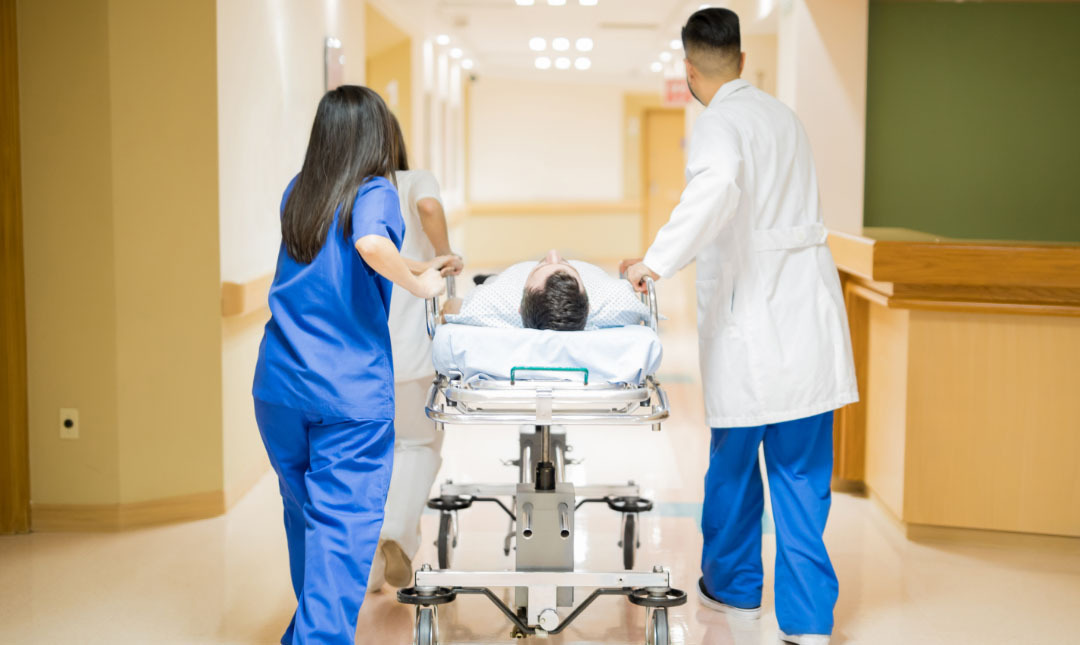
One common example is emergency department patient flow. RTLS can help staff understand where patients are in the care process and improve communication between clinical teams. Similar benefits extend to surgical workflows, imaging departments, and ambulatory care settings.
In addition to real-time visibility, RTLS workflow data provides valuable operational insights. Healthcare organizations can analyze historical trends, identify peak patient volumes by day of week or time of day, measure throughput, and uncover bottlenecks. These insights can help leaders make more informed decisions around staffing, resource allocation, and workflow optimization to better match patient demand.
Reducing Manual Communication
Instead of relying on phone calls, manual updates, or status boards, RTLS can automate workflow events based on real-time location data. Integrations with systems such as nurse call, clinical communications, and operational workflows help reduce manual steps and improve coordination across care teams.
These automated workflows help keep clinical operations running smoothly, reducing delays and enabling staff to spend more time delivering care. The result is improved throughput, greater operational efficiency, and a better experience for both patients and caregivers.
Patient Experience and Satisfaction
RTLS supports a more informed, connected, and efficient patient experience while providing operational leaders with greater visibility into facility capacity and performance. Healthcare organizations can use RTLS-powered patient experience technologies to:
- Provide patients with timely updates via interactive digital whiteboards.
- Display care team information to improve communication and transparency.
- Improve navigation with digital wayfinding solutions.
- Keep patients and families informed throughout the care journey with automated status updates and workflow-driven notifications.
5. Infection Control and Compliance
Global health events have reinforced the importance of infection prevention and healthcare preparedness. Healthcare organizations continue to seek tools that support proactive infection control strategies.
Contact Tracing and Hand Hygiene Monitoring
RTLS enables contact tracing and exposure investigation capabilities. Location and interaction data can help infection prevention teams understand potential exposure pathways and accelerate investigations when needed.
Organizations also incorporate RTLS into hand hygiene initiatives. Electronic monitoring solutions provide insights into compliance patterns while helping support broader infection prevention programs.
Environmental Monitoring
Healthcare facilities store temperature-sensitive medications and other critical materials that require continuous oversight. Connected environmental sensors monitor temperature and other conditions in real time. When readings exceed established thresholds, RTLS infrastructure delivers immediate alerts.
RTLS data can also support:
- Compliance reporting
- Accreditation efforts
- Quality improvement initiatives
- Organizational preparedness programs

Improve Clinical Workflows With CenTrak RTLS Solutions
Healthcare organizations use RTLS to improve visibility, enabling caregivers to deliver safe, efficient, and connected care. CenTrak provides end-to-end RTLS solutions for healthcare environments. We help organizations deploy location technologies that support multiple use cases across departments.
Our solutions integrate with the platforms clinical teams rely on, including EMR systems such as Epic, Cerner, and Meditech, along with nurse call and clinical communications platforms from providers such as Rauland, Vocera, and Hillrom.
CenTrak's flexible integration platform connects RTLS data across clinical, operational, and facilities workflows, and scales as your organization's needs grow.
We also help you strengthen care delivery across the entire patient journey through location intelligence and workflow visibility.
Contact us today to learn how we can help you build a scalable RTLS solution for your organization.