How RTLS Supports Joint Commission National Performance Goals

The Joint Commission is a leading global organization focused on ensuring patient safety and quality healthcare. For over 75 years, it has been upholding high standards through accreditations and certifications. The growing focus on the safety of healthcare professionals and patients is reflected in The Joint Commission’s transition from its former National Patient Safety Goals® (NPSGs) to National Performance Goals (NPGs). Let's learn more about NPGs and their impact.
What Is the Joint Commission's New Chapter?
Healthcare safety extends beyond protecting patients, it also means protecting the people who provide their care. Effective January 1, 2026, The Joint Commission replaced its former National Patient Safety Goals® (NPSGs) chapter with a new National Performance Goals (NPGs) chapter for accredited hospitals and critical access hospitals.
The NPGs do not introduce new requirements. Instead, they reorganize existing requirements that rise above regulation into 14 measurable, actionable goals, creating a more streamlined framework for healthcare organizations to track performance, address key safety risks, and drive continuous improvement in patient safety and quality of care.
Among these goals is a specific focus on a culture of safety (NPG #2), including workplace violence prevention (NPG #2a). By incorporating existing workplace violence prevention standards into the NPG framework, The Joint Commission reinforces the importance of proactively identifying safety risks, establishing prevention and response processes, analyzing incidents and trends, and continuously improving programs designed to protect healthcare workers.
For healthcare organizations, the shift to NPGs provides a clearer framework for demonstrating performance across critical areas of safety and quality, and highlights workplace safety as an important component of a broader culture of safety.

NPG #2a: Prioritizing Workplace Violence Prevention
Healthcare workers make up only 10% of the total U.S. workforce, but they experience 48% of non-fatal injuries resulting from workplace violence. The growing incidence of workplace violence has prompted increased attention to healthcare worker safety, and The Joint Commission responded by issuing new and revised workplace violence prevention standards in 2022. Those standards are now incorporated into the 2026 National Performance Goals framework under NPG #2a: Preventing Workplace Violence. The goal establishes a more structured approach to workplace violence prevention, with requirements addressing leadership oversight, prevention and response, reporting, data collection and analysis, worksite analysis, training, and post-incident support.
For healthcare organizations, the focus is not simply on responding to incidents after they occur. The standards emphasize establishing a comprehensive workplace violence prevention program, identifying risks, analyzing incidents and trends, and taking action to mitigate workplace safety and security risks.
The key requirements of NPG #2a include:
- A formal workplace violence prevention program
- Defined reporting and investigation processes
- Annual worksite analysis
- Regular staff training
- Post-incident support
- Data collection and continuous improvement
How Real-Time Location Systems Support Compliance
Real-time location systems (RTLS) are changing the way hospitals maintain safety and meet the Joint Commission's workplace violence prevention standards. An RTLS is an innovative technology that provides real-time oversight. By ensuring continuous visibility, this technology is a strategic investment for hospitals seeking to enhance operations and meet regulatory requirements.
Addressing NPG #2a With RTLS
There are several applications of this staff safety technology for healthcare to ensure that your staff remains protected.
Rapid Response and Location Accuracy
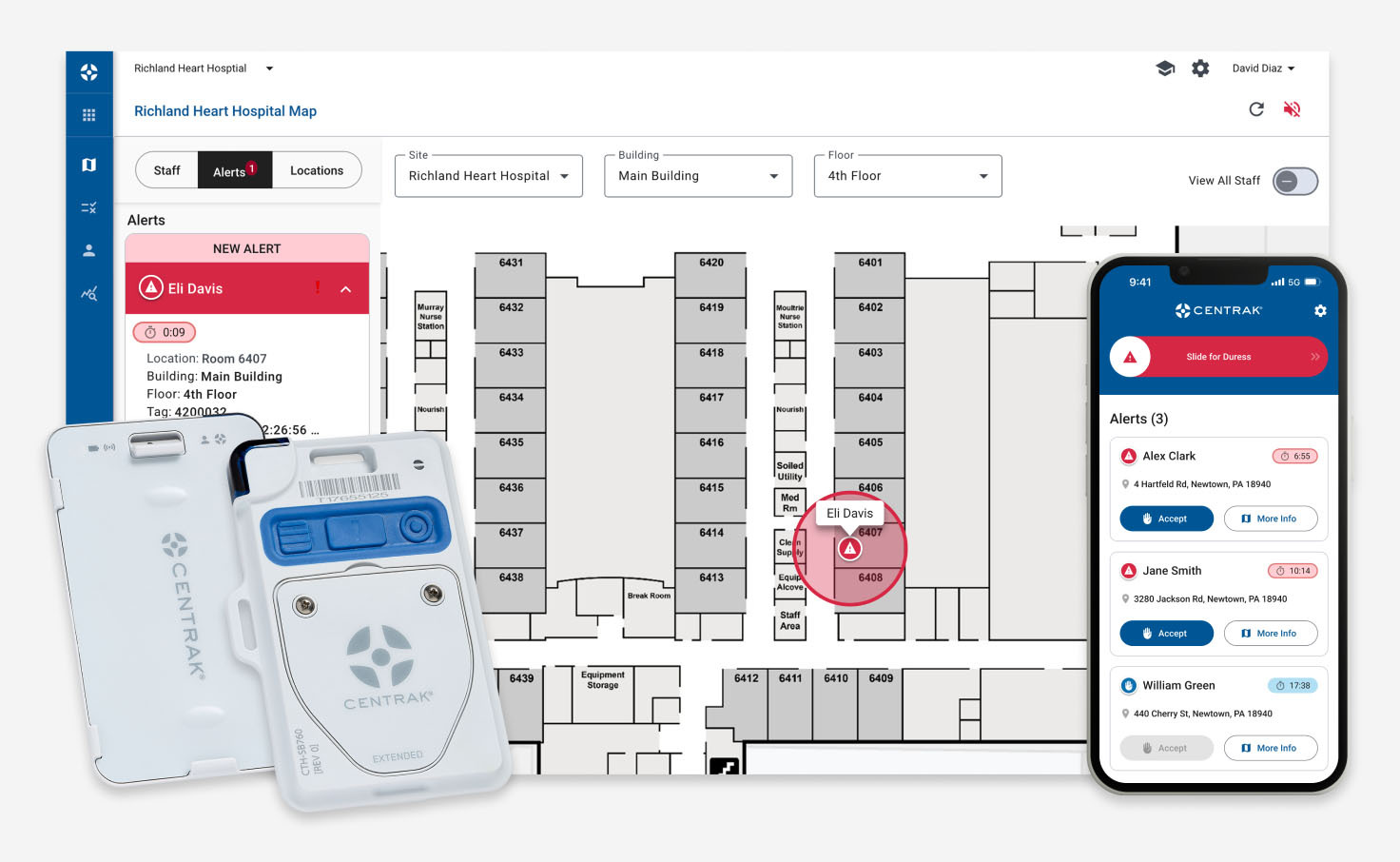
When an incident occurs, delays in getting help can increase risk. Without a mobile duress solution, staff may have to shout for assistance or attempt to reach a fixed, wall-mounted panic button (something that may not be possible as a situation escalates). Wearable duress badges and mobile app-based alerts travel with staff wherever they go, enabling them to discreetly summon help while providing responders with accurate location information to accelerate assistance.
With RTLS technology, your team maintains accurate location awareness throughout an event, even as the situation—and the staff member—moves. CenTrak systems include a wireless call button built into staff badges, as well as an iOS and Android mobile application, giving staff multiple ways to summon help without escalating the situation. When an alert is activated, the system instantly communicates the healthcare worker’s name and location to responders, helping them reach the right person faster and giving staff confidence that help is on the way.
Data-Driven Prevention and Analysis
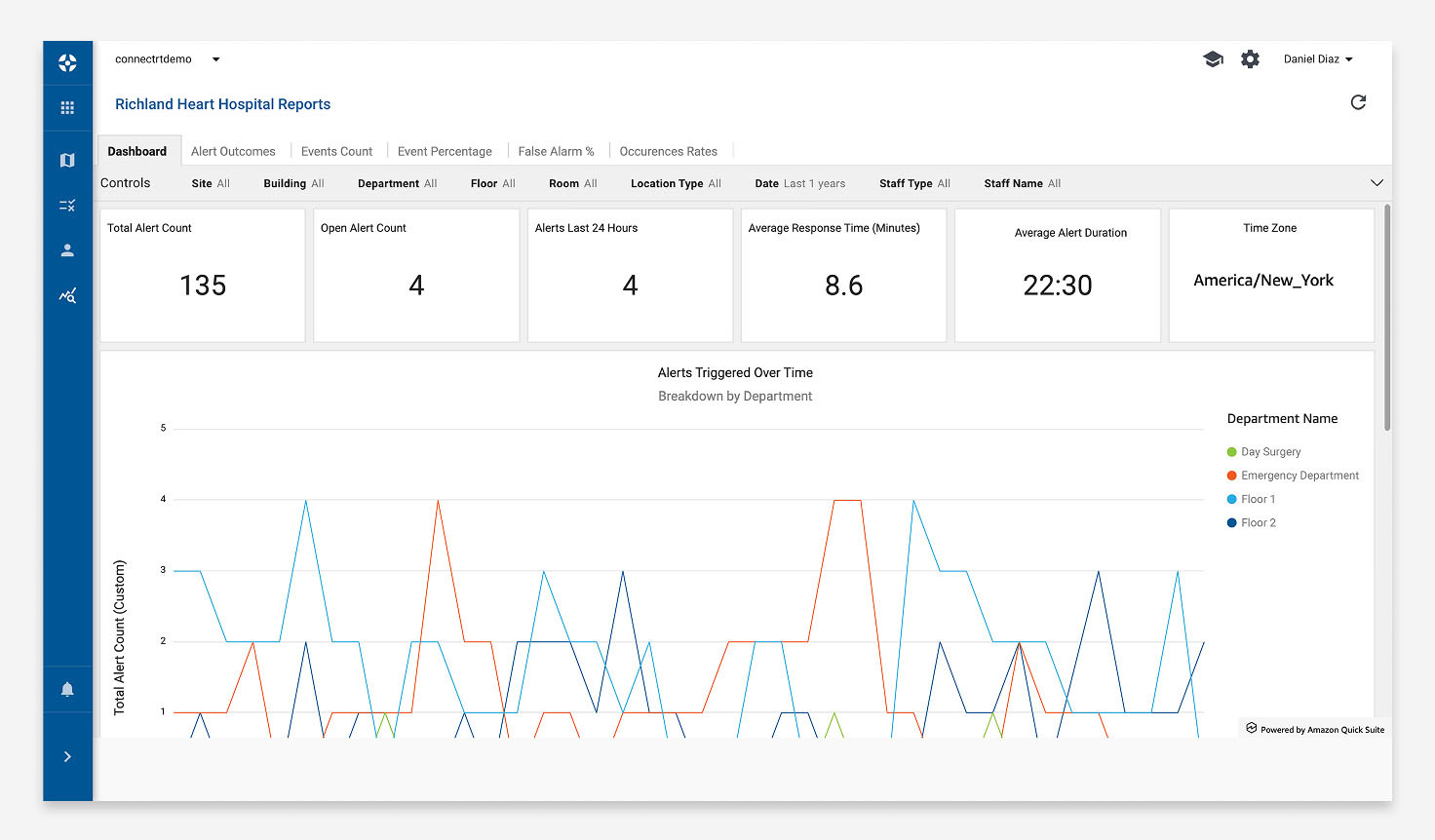
Workplace violence is widely underreported, leaving healthcare organizations with an incomplete understanding of where and when staff safety risks occur. Many verbal threats, escalating confrontations, and near-miss incidents go undocumented, making it difficult to identify patterns and proactively address risks. RTLS-enabled duress solutions automatically capture duress activations and response data, creating a more comprehensive view of safety events across the hospital. By transforming real-world incidents into actionable insights, organizations can identify high-risk areas, uncover trends, support annual worksite analyses, and drive continuous improvements to workplace safety programs while helping meet reporting and compliance requirements.
Operationalizing Prevention Programs
One of the main demands of the Joint Commission's NPGs is establishing a comprehensive, multidisciplinary workplace violence prevention program. RTLS can serve as a technology component within a broader workplace violence prevention program, providing tools for real-time response, location visibility, event documentation, and data analysis. An expert-installed system ensures you have faster response times, location visibility for risk mitigation, and clear incident documentation. RTLS helps you streamline program implementation and demonstrate a commitment to staff safety.
Expanding RTLS Impact Across Other NPGs
Beyond just the #2a goal, RTLS technology extends to other goals documented in the Joint Commission's NPGs:
- NPG #1: Right patient, right care: RTLS can support patient identification and care workflows by providing location context and helping staff locate patients, equipment, and care resources. They further help to enhance infant protection and patient wander management.
- NPG #3: Emergency readiness: You can use this technology to locate critical equipment during emergencies, helping facilities improve preparedness and response.
- NPG #5: Preventing and controlling infection: RTLS can provide location and interaction data that may support contact tracing and infection prevention workflows, while automated hand hygiene compliance monitoring can help organizations measure compliance with hand hygiene practices.
- NPG #11: Creating a secure and safe physical environment: Your RTLS can go beyond the staff duress response to proactively monitor access to restricted areas.
Partnering for a Safer Future
The 2026 National Performance Goals reinforce the importance of measurable, proactive approaches to patient and workforce safety. For healthcare organizations, technology can play an important role in putting those principles into practice—providing greater visibility into safety events, supporting faster response, and generating data that can inform ongoing improvement.
CenTrak's RTLS solutions help healthcare organizations strengthen their safety programs with real-time location visibility, staff duress capabilities, incident data, and actionable insights. By connecting people, events, and location intelligence, healthcare organizations can build a more responsive approach to workplace safety while supporting broader patient safety and operational goals.
Request a demo to see our RTLS in action.